Next Monday I'll post the latest Weapons & Warriors article. So for this week, I am presenting 3 more drawings for previous posts. The Urumi of the Rajput, Daneaxe of the Norsemen (Viking), and Shuriken of the Ninja. All three are fascinating weapons; click on their links and check them out if you haven't already.
Showing posts with label sword. Show all posts
Jul 28, 2014
Jul 7, 2014
Weapons & Warriors: The Cutlass of the Europeans
![]() |
| Art by TL Jeffcoat |
The
most famous sword used by pirates in the 1600’s and 1700’s is often rumored to
have been invented by pirates, but my research turns that out to be an unproven
legend. The Cutlass has been a common tool for sailors for centuries. Its blade
is strong enough to cut heavy ropes and canvas, and small enough to be used in close
quarters combat. The blade was short enough to easily avoid getting entangled
in various riggings found on a sailing vessel while fighting off a boarding party,
or boarding another vessel.
The
blade is broad, flat, curved, and about 2 feet in length (approximately 0.61
meters). Only the outside of the curved blade is sharpened, and the handle is
usually protected by a hand guard of some kind, either a cup shaped piece of
elaborately designed metal, or a simple loop. This gives the Cutlass an
additional technique with the backhand or jab using the pommel or guard to
strike an opponent that is too close to slash with the blade. The hand guard is
also useful in protecting the sailor from losing fingers when a blade strikes
the handle.
Jun 30, 2014
Makraka Drawn...
![]() |
| Art by TL Jeffcoat |
Next week, I'm planning to post a new Weapons & Warriors. When I'm not working on that, I'll be working on the new chapters for Devil Dog. Have a great 4th of July world.
Oct 25, 2013
Weapons & Warriors: The Khopesh of the Egyptians
![]() |
| Art by TL Jeffcoat |
This curved sword was designed with the concept of combining the war axe
and the sickle. The Khopesh is probably one of the strangest looking swords
ever made. The isolation of ancient Egypt is one of the reasons their culture is so different than their
neighbors. They had their own pantheon of deities and their own unique arsenal
of weaponry. You can always tell when something is modeled after ancient
Egyptian culture as opposed to anywhere else in the world.
The Khopesh was around two feet (60 centimeters) in length. The blade was molded from bronze and sometimes the leather wrapped handle was decorated with electrum (silver and gold mixed metal). The outer curve of the blade was sharpened while the inner side was dull. Overall it was a light weighted weapon which is ideal for carrying around the desert.
Jun 28, 2013
Weapons & Warriors: Talwar of the Sikhs
![]() |
| The Talwar Art by TL Jeffcoat |
There are
several variations of this curved sword, but none are completely the same. The
Talwar was used by both Moghuls and Sikhs in the region of India. It is
slightly curved like a sabre but with a wider blade at the end. The British
sabre was most likely modeled after the Talwar. They are similar in design but
the handle of the British Sabre is different.
The entire
weapon is made with iron, and the handle is short and capped with a disc
shaped piece of metal. The metal disc had a spike protruding from underneath.
The short handle gives the warrior a firmer grip, but can also restrict most
stabbing and hacking strikes. The blade is sharpened all the way to the hilt,
unlike several other similar sword designs. The sword is not just one piece of
molded metal. The blade is inserted into the cross guard with an adhesive. Making the blade a separate piece from the handle gives a sword more flexibility when striking. A sword that doesn't give is soon a broken sword.
Jan 15, 2013
Weapons & Warriors: The Claymore of the Scottish
![]() |
| Art by Steven DeVon Jones |
William Wallace’s sword
has been rebuilt and preserved over the years. It is on display in Scotland,
but some historians believe only part of the sword’s blade was the original
sword of Wallace. A few hundred years can be hard on a sword. The hilt and
crossguard on William Wallace’s sword is different from the Claymore, but that
could be from its reconstruction. The part of the weapon believed as being the
original is a portion of the blade, which also verifies that it was never a Claymore.
The tip of the blade narrows towards the end to a point. The Claymore does not
narrow a whole lot until its triangular tip.
The name Claymore comes
from the Gaelic word "claidheamh mòr," which means Great-Sword. One thing that
made the Claymore stand out in comparison to other swords, including the other
types of two handed swords, was the leather wrapped ricasso that was between
the blade and the crossguard. The entire sword was long enough that the average
man could place the tip on the ground and the hilt would reach his armpit,
which is about four and a half feet.
Dec 29, 2012
Fantasy Weapons Lore: Sting of the Baggins'
Today I’m
going to talk about the famous Sting. I don’t mean that singer that starred in
Dune and got his nickname in high school by wearing a black and yellow stripped
shirt. No, the Sting I’m going to discuss will sing a different tune. A song
filled with a history of blood, monsters, and hobbits. For those of you who saw
the Lord of the Rings, or even better, read the books, you are already aware of
this blade. You already know some of its magical nature, but do you know its
origin?
Some Tolkien
historians have discussed the origins of this mysterious sword. Yes Middle-Earth is deep and rich enough to have expert historians studying the
thousands of documents and notes that JRR Tolkien wrote up over the years it
took him to create his world. Some of these historians have thought that it was
not a blade that was forged alone. It was a companion
blade made alongside two other swords that were found with it in the Hobbit. The
largest blade starred in the Lord of the Rings as Gandalf’s sword, Glamdring. There
was another shorter version of Glamdring which is called Orcrist. I can’t tell
you too much about Ocrist because that would create spoilers for The Hobbit
movies still in the editing room. Glamdring and Orcrist are believed to have
been made as sister blades. Orcrist was shorter than Glamdring and they were
probably intended to be wielded in a similar fashion to the Samurai Daisho.
Jul 30, 2012
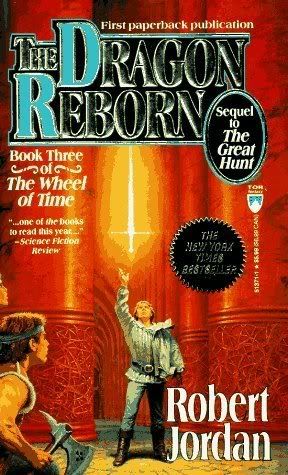
Fantasy Weapons Lore: Callandor of Rand al’Thor
One of the
most powerful weapons ever imagined up is the sword called Callandor. Despite
its appearance it is not actually a sword. This flashy crystal-like sword is a
conduit for the male channelers of saidin (The One Power). Channeling this
power and weaving it into the elements in the Wheel of Time series is how
magicians cast spells. They don’t use wands and some are powerful
enough to sink entire cities.
Callandor is
one of the most powerful tools ever designed in this world and was molded into
the shape of a sword for the man who wielded it into battle at the head of his
huge armies against the Dark One's forces. It was made to allow a man to greatly increase the amount of power that he
can normally channel.
This is not
the same as the wands and staffs of Harry Potter and Lord of the Rings.
Although those items increases a sorcerer’s power and allows the caster to cast
spells at greater speeds without instant fatigue, the casters in the Wheel of
Time don’t require hand movements or words to cast spells. All they have to do
is learn to mentally manipulate the elements they can draw on to do what they
want. Each “spell” is actually a weave of elements that is controlled through
channeling the One Power.
Jul 25, 2012
Weapons & Warriors: The Dadao of the Shaolin
The Dadao is
also called a Chinese sabre, Chinese Big Knife, or Chinese Great Sword. This
heavy blade has served several purposes over the centuries in China. Some Shaolin monks
train in the use of this sword and some daring monks train to use both the
Dadao and the Jiujie Bian together. One way to describe the Dadao is that of a
machete on steroids.
The blade of
the Dadao is perfectly designed for chopping and was modeled after an agricultural tool for harvesting. The Dadao is considered a peasant's sword because it is a pretty simple and does not require a lot of training. The heavy blade
and long handle balances the sword so that it is not difficult to maneuver
despite its weight. Although it is not a light sword, it is not as
heavy as an axe. However, the broad blade is designed to cut with the same power as an axe. The
long handle allows for wielding with one or two hands.
The blade is
only about two feet in length and the handle is just over a foot. The entire
sword’s weight will vary from two pounds to close to four pounds depending on
the type of and quality of metal used to forge it. The blade widens at the tip
and curves slightly back to the wielder to increase the momentum of the tip. The width of the blade gives the Dadao
the strength and speed to chop through bone and leather armor with ease.
Jul 6, 2012
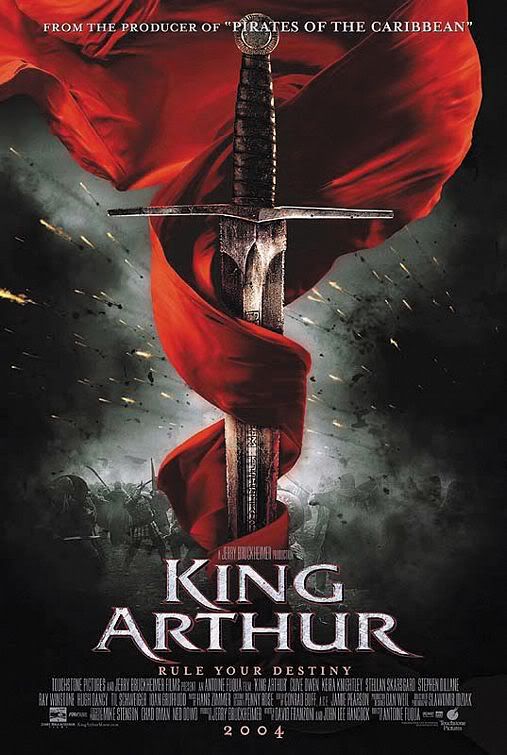
Fantasy Weapons Lore: Excalibur of Arthur Pendragon
The other sword used by Arthur Pendragon is known as the Sword in the Stone and was nothing more than an extravagant typical broadsword that was used by his father, Uther Pendragon. When Arthur was born, Uther was slain in battle. Merlin took this sword and jammed into the rock and enchanted it so that only the true heir of Uther Pendragon could pull the sword. Arthur’s half-sister, Morgan le Fay was not the heir as long as Arthur was alive and is why she never claimed the blade of her father. This is not Excalibur, despite a lot of popular movies, books and cartoons making the blades the same.
Eventually Arthur came to the sword in the stone and retrieved it, making himself the king of Britain. Merlin gave him his support and Arthur went on to gather the people under the new banner of Pendragon. That would also involve some battles as Arthur’s father was a warmonger and not very well liked by several rulers. Many lords joined with Morgan le Fay, Arthur’s half-sister, who felt cheated out of the throne by a brother she didn’t know existed.
Labels:
arthur,
blade,
britain,
excalibur,
fantasy,
fantasy weapon,
history,
lady of the lake,
magic,
merlin,
morgan le fay,
mythology,
pendragon,
sword,
sword in the stone,
uther,
warrior,
weekly
Jul 4, 2012
Weapons & Warriors: The Fu Tao of the Shaolin
To watch a Shaolin Monk perform with Fu Tao is a wonder to behold. These hooked swords are as dangerous to the Monk wielding them as they are to their opponent. The monk will constantly twirl the swords and with a flash he can strike with the razor sharp edges.
The sword blade is narrow and the tip curls forward into a hook. The edges are sharpened so that anything that slips into the hook can be snared. The hooks have a variety of uses, including tripping an opponent or disarming. Another trick used by Shaolin is hooking two swords together to double the reach of the deadly blades twirling them out and slashing with the razor sharp dagger below the handle. The hand guard is a sharpened crescent moon with the points facing away from the hand. No matter what angle the blade strikes from, it can slice into a foe with ease.
Apr 18, 2012
Weapons & Warriors: The Makraka of the Zande Warrior
Although the Makrigga and Kpinga were the first weapons a Zande Warrior reached for in a fight, they had another weapon that was as intimidating to look at as the other two. They had their own nightmarish version of a short sword they called the Makraka.
The handle was made of wood and bound with animal hides. The hammered iron blade was shaped like a sickle and was swung in a similar motion. The tip of the blade was thicker and heavier than the central portion of the blade. Unlike other sickle related swords used in Arabian lands and southern Europe, the Makraka was only sharpened on the interior portion of the blade.
The blade was specially designed to remove limbs with ease, like a more extreme version of the Spartan Kopis. This gave the weapon a dual purpose in that it was wicked looking and deadly weapon in combat, and afterwards it was used to remove the heads of prisoners. We’ll get into that ritual next week when I talk about the Azande’s use of psychological warfare against their enemies.
Mar 21, 2012
Weapons & Warriors: The Kilij of the Ottoman Cavalry
This week I’m doing a special Weapons Weekly on one of the grandfathers of the modern cavalry sabre, the Kilij. Unlike most other sabres, the Kilij had a special design that not only made it more dangerous than other sabres, but gave it an exotic appearance that fit well into the Turks that wielded it. The sabre was not a sword designed for fighting on foot such as the longsword and broadsword, but was specifically designed for cavalry. Sabres have curved blades that are sharp on only one side. Their blades were forged to handle slicing without shattering. The Kilij was one of the few sabres that were designed with thrusting as an option, but like all sabres, slashing at an opponent was still far more deadly.
The Kilij was a redesigned version of the Turko-Mongolian Sabre, which may have been the first sabre ever recorded in history. The Mongolians were notorious cavalrymen and had a heavy influence on Turkish culture after the Mongols invasions of the Turkish and Arabic lands. The difference between the Kilij and most other sabres is the tip. It had a double edged tip that flared out making the tip stronger and heavier. This added weight gave the Kilij an axe-like quality in that it was capable of cutting through bone with one swipe.
Mar 14, 2012
Weapons & Warriors: The Naginata of the Samurai
The Samurai were some of the greatest and most disciplined warriors in history. One thing they were well known for was having the right weapon for the right situation. A Katana or Tessen had limited use against a mounted opponent. The Naginata was designed to put distance between the Samurai and his opponent.
At a glance, the Naginata looks similar to a spear with a long thin curved blade, but it is actually related to the poleaxe, halberd, and even more so to the glaive. The wooden pole was anywhere from 5 to 6 feet in length. The end of the Naginata was fixed with a 3 foot sword-like blade that had a long steel piece with a hole opposite the sharp end. This thin sliver of metal was slid through a steel cap in the end of the pole and a wooden peg was squeezed through the hole lined up with a hole in the pole. This made it easier for the warrior to sharpen his blade by removing it first instead of trying to maneuver around that entire cutting surface with a very long pole pulling on it.
Feb 27, 2012
Weapons & Warriors: The Longsword and Seaxe of the Norsemen
Despite some artists’ vision, the Norsemen did not wield giant swords. Those heavy Claymores were more popular among the Scotts across the sea. In fact, the Norseman rarely used a sword, since it was very expensive and difficult to forge. Most Norse, who did carry a sword, had to find a proper blacksmith to have their weapon created. Not all blacksmiths had learned the art of sword making. Making a blade in the times of the Norsemen Age was a long process that could take around a month and cost a lot of money, more than the common Norseman could afford.
Norsemen considered the sword a sign of wealth and success, or a descendant of someone wealthy or powerful. This is one of the few weapons that were handed down from generation to generation. An inherited sword was not always an immediately useable gift as it might have been well used already and required some repair. If the blade was recovered from a battlefield or duel it was most likely damaged. Those in power were often challenged by others who wanted their position in society, and a duel was often an answer to such a challenge.
The Norse respected strength and skill in combat above all. So winning a duel was an acceptable way of working out an agreement. This carried over into more petty things such as who had the right to marry a certain woman or if a man wanted to cut a tree on his land, but his neighbor claimed it was his tree. Nothing is more final than a fight to the death. That may sound extreme, but keep in mind, most Norsemen wanted to die fighting so they could go to Valhalla. Dying of old age was considered an embarrassment.
There were two swords used by the Norsemen. The most common sword was the double edged longsword, which had a thin triangle shaped blade that was around 3 feet in length. It was most often used with a round wooden shield. Most swords in Europe in this age did not have a cross guard to protect the hand from enemy blades sliding down on the fingers.
Many of the swords made in the later ages of the Norse were marked on the blade. A change in the types of steel and iron used allowed for this that the previous metals did not. The older versions included iron with the steel which was twisted together at very high temperatures and then flattened and sharpened. The newer metal was stronger steel, so that marking into the metal did not weaken the blade as it would have with previous designs. Norse spent a lot of time crafting the elaborate hilts and often named the sword once it was complete.
The Seaxe is equally as long, but generally has a thicker blade and is only sharp on one side. The exact thickness varied and the Seaxe resembled anything from a long machete to a cleaver. The Seaxe was more common on the longships because they made excellent blades for cutting ropes as well as removing an enemy’s limbs in combat. All practical warriors enjoy multipurpose tools.
Modi, was the Norsemen God of Rage and was often envisioned with a sword. One of the reasons Norsemen were called savage barbarians by outsiders was the seemingly fearless rage that some of these warriors seem to present on the battlefield. There were myths and legends of these Berserkers. There is no shortage of stories about a warrior who would charge into the enemy line with the strength of ten men and swing his weapons wildly. He could ignore all injuries that were inflicted upon him until he was dead, or everyone else was.
In reality, this berserker rage is just a legend. It is not unlikely that a few of the Norsemen would throw themselves onto an enemy line and swing their sword like a crazed madman, but that reflects their religious beliefs more than some mysterious rage induced berserk. However, most legends and myths have some basis to something that was real. With one of the members of their pantheon being a God of Rage, it is likely that some Norsemen pushed their adrenaline and rage over the top and went mad in battle as a tribute to their God. I’m not an expert on that matter, but it sounds like a possibility.
I hope you enjoyed this
edition of Weapons and Warriors, click here to view the entire catalog of
weapons and cultures. Thank you, see you next week.
Jan 2, 2012
Weapons & Warriors: The Bushidō of the Samurai
![]() |
| Art by Steven DeVon Jones |
Bushidō requires that all Samurai must be loyal to the death to whoever they serve. They must remain honorable even when they are about to die. Don’t bother interrogating a Samurai because he would rather die a horrible painful death than dishonor himself. They were trained at birth to be loyal, deadly and practical. They would shed their own blood if they dishonored themselves.
Surprisingly, there was no written or spoken code for Bushidō. It was more of a creation of beliefs that evolved over generations of military families. As the child was born, he was destined to be Samurai, and started training as soon as he could walk and understand his lessons. After centuries of families training children in this manner, there was never a need to create a written reference to what the code actually was, it was just naturally accepted and known. It wasn’t until later when historians tried to search out its roots that Bushidō was even named.
Dec 12, 2011
Weapons & Warriors: The Daishō of the Samurai
Nov 27, 2011
Weapons & Warriors: The Shikomi of the Ninja
There were two forms of Shikomi used by Ninja, the Gatana and the Zue. Both were effective tools used to conceal a sword. The Ninja were well known for hauling around an extensive arsenal, but sometimes that was not always possible. For instance, while walking around in broad daylight among the public, a Ninja could not carry his swords without drawing attention. Or could he?
Once the technology to create thinner blades that wouldn’t break so easily was learned, the Ninja embraced it with a new weapon that was the most ingeniously disguised sword ever made. The Shikomi-Gatana was the more common of the two. When carried around by a Ninja who wanted to appear as a traveler or monk, it resembled a walking staff. A common tool used by many people both wealthy and poor. Once threatened or attacked, the Ninja would reveal the true nature of the staff. In reality, the staff was a scabbard that held a thin bladed sword, which could easily be drawn from one end.
This caught more than one enemy by surprise as the Ninja would often begin the fight using the staff as if it was what it appeared to be, but instead of swatting at the swordsman, he would deflect his sword, moving to the side and drawing his own sword hidden in the staff. Ninja trained well at these types of maneuvers and often cut down an opponent before they realized the Ninja ever had a sword at all.
Nov 22, 2011
Weapons & Warriors: The Ninjato of the Ninja
The greatest enemy to the Ninja was the Samurai. Ninja were not weak or poor swordsmen either but they were no match when they drew a katana to fight the masters of the warrior caste of Japan. Despite the vast array of weaponry that Ninja studied, they too studied the art of swordplay. They also mastered it and varied their style to counter that of the Samurai. However many historians believe that the Ninja adopted a shorter version of the katana instead of the bulkier length of the armored warriors. Samurai’s katana were a far superior quality of designed weapons than anything a Ninja could afford, and any Samurai who fell to a Ninja would certainly lose his precious blade to his slayer. Not all Ninja acquired a katana by theft or killing a Samurai, but it wasn’t unheard of. In fact, prying a katana from the bloodied hand of a Samurai was not only a wonderful prize, but an excellent reputation builder among the Ninja. Samurai did not give up their weapons while they still breathed.
Oct 17, 2011
Weapons & Warriors: The Rajput, Sons of Kings
The Rajput warriors are a noble caste that once ruled portions of India and Southeast Asia. Their reign dates back to the fall of the Gupta Empire sometime in the 5th or 6th century and lasted until 1947-1950 when the final Rajput princes joined their kingdoms with modern India after it achieved its Independence from British rule. They were given the option of joining Pakistan, India or remaining independent. Overwhelmingly they decided to unite with India. Rajput literally means the son of a king and they were born as nobles and trained to fight as soon as they were old enough to learn. They were mentally focused and well respected warriors by all who traveled in these regions. When the British occupied India, they recruited heavily among the Rajput because they admired the warrior culture that they felt could help them with the colonial army.
The Rajput had to defend their lands against many invaders over the centuries. Some of these powerful enemies were the Mongols and Arabs. Despite being outnumbered, they held their ground and repelled almost every invader that tried to conquer them by force. The region ruled by the Rajput was very fertile and productive and was very irresistible to its neighbors. During the 11th and 12th centuries, Islamic invaders constantly troubled the Hindu Rajput. The Rajput fought valiantly but often fought amongst their neighboring Rajput kingdoms as well. This inability to unite caused many problems towards the 1300’s and Islam began to spread throughout their lands. Eventually they allied with the Mughal Empire in the 1600's and remained loyal even after the British supplanted the Mughal power 200 years later.
Subscribe to:
Posts (Atom)