Showing posts with label blade. Show all posts

Jul 7, 2014

Weapons & Warriors: The Cutlass of the Europeans


Art by TL Jeffcoat

The most famous sword used by pirates in the 1600’s and 1700’s is often rumored to have been invented by pirates, but my research turns that out to be an unproven legend. The Cutlass has been a common tool for sailors for centuries. Its blade is strong enough to cut heavy ropes and canvas, and small enough to be used in close quarters combat. The blade was short enough to easily avoid getting entangled in various riggings found on a sailing vessel while fighting off a boarding party, or boarding another vessel.

The blade is broad, flat, curved, and about 2 feet in length (approximately 0.61 meters). Only the outside of the curved blade is sharpened, and the handle is usually protected by a hand guard of some kind, either a cup shaped piece of elaborately designed metal, or a simple loop. This gives the Cutlass an additional technique with the backhand or jab using the pommel or guard to strike an opponent that is too close to slash with the blade. The hand guard is also useful in protecting the sailor from losing fingers when a blade strikes the handle.

Jun 30, 2014

Makraka Drawn...

Art by TL Jeffcoat
I've been writing my fingers off, but I squeezed in some art time by completing the Makraka, and made some more progress on the Hussite War Wagon. Here is the Makraka, check out the original post it's been attached to for more.

Next week, I'm planning to post a new Weapons & Warriors. When I'm not working on that, I'll be working on the new chapters for Devil Dog. Have a great 4th of July world.

Jan 7, 2014

Weapons & Warriors: The Keris of the Javanese


Art by TL Jeffcoat

This wavy dagger is one of the strangest weapons I’ve ever seen. I first saw in it a video game called Diablo II, and I had to find out if it was a real thing and why it was used as a magical conduit in the game when it looked like a knife. The game titled the dagger with the popular American and European name of Kris, but back in the Indonesia Islands where it originated it is called a Keris. The Keris has three parts, the blade, the hilt, and the sheath

The Keris was a ceremonial decoration, a weapon, and the tool of an executioner. In the ancient kingdom of Java, it was common for every man and woman to strap a Keris on their belt and behind their back when traveling outside of their home. The Javanese believed the dagger housed a magic power of its own that was fueled by the spirit within it, and they annually brought them to specifically trained bladesmiths for maintenance as part of a ritual for the spirit. The relationship between the owner and the Keris was important, and to test a blade the owner would sleep with the Keris under his pillow. Depending on whether his dream was good or bad that night he would then know if the blade was right for him. If it was not, the person got rid of it, because a bad blade could bring misfortune.

The blades were forged in layers of various irons and nickel that were folded together repeatedly. The stronger the smith wanted the blade, the longer he would fold the metal. Some blades were folded hundreds of times and took years to finish. Keris blades came in all sizes, but were never long enough to be considered a short sword.

Aug 20, 2013

Weapons & Warriors: The Lantern Shield of the Europeans


I’ve read several stories about the lantern shield and realized that a lot of historians did not like it much. Some called it impractical and clumsy, some said it was for amateurs, and some claimed that a sword and shield on their own was much better. I disagree with them all. This weapon was never meant to be used by itself. Combined with a rapier (thin bladed fencing style sword), it was a game changer for anyone who had actually trained with the thing. This is one of the most insane weapons I’ve ever run across and I will find a way to get one for my collection someday. It’s truly a masterpiece of mind boggling weaponry.

The Lantern Shield (Art by TL Jeffcoat)
A lantern shield is hard to describe. It has a lot of pieces. All those moving parts are one of the things that make it look clumsy. In Italy during the 1500’s, many duelists practiced using Lantern Shields. The entire thing was made of steel, and bolted together. It was worn on the shield arm. The Lantern Shield was designed to replace the standard lantern carried by duelists when they fought in the dawn hours when sometimes the sun wasn’t up enough. Lanterns made decent shields if the duelist knew how to use them, and if raised at the face of an opponent, would blind them. It was a cheap move, but very effective.

Jun 28, 2013

Weapons & Warriors: Talwar of the Sikhs


The Talwar Art by TL Jeffcoat

There are several variations of this curved sword, but none are completely the same. The Talwar was used by both Moghuls and Sikhs in the region of India. It is slightly curved like a sabre but with a wider blade at the end. The British sabre was most likely modeled after the Talwar. They are similar in design but the handle of the British Sabre is different.

The entire weapon is made with iron, and the handle is short and capped with a disc shaped piece of metal. The metal disc had a spike protruding from underneath. The short handle gives the warrior a firmer grip, but can also restrict most stabbing and hacking strikes. The blade is sharpened all the way to the hilt, unlike several other similar sword designs. The sword is not just one piece of molded metal. The blade is inserted into the cross guard with an adhesive. Making the blade a separate piece from the handle gives a sword more flexibility when striking. A sword that doesn't give is soon a broken sword.

Feb 16, 2013

Weapons & Warriors: The Ballistic Knife of the Russians


Art by TL Jeffcoat
This week, I wrote about a weapon that is not so much an ancient weapon, but something unique and very cool. If you are looking into getting one of these bad boys for your collection, be aware of the laws for your ares. I was searching for one of these to add to my collection, but after learning about several laws banning this knife in most of the USA, I have decided to instead write about it for Weapons & Warriors.

It is a common belief that the Spetsnaz (Russian Special Forces) were trained and skilled in using Ballistic Knives. I have never found any trustworthy verification that the Ballistic Knife training was anything more than rumor or propaganda. However, I did find plenty of information about the Spetsnaz training in throwing knives to quietly eliminate enemies out of reach without making too much noise. Since the Russian variation of the Ballistic Knife is spring loaded, it’s pretty quiet, and therefore it is possible that the Spetsnaz also master firing the Ballistic Knife alongside throwing knives. Aside from the show the Deadliest Warrior using the Ballistic Knife as a Spetsnaz weapon, I found a couple sources that speculated the Spetsnaz trained with the weapon, but rarely used them.


Jan 15, 2013

Weapons & Warriors: The Claymore of the Scottish


Art by Steven DeVon Jones
Most people these days think of William Wallace and the movie Braveheart when they hear the word Claymore. The sword that William Wallace used was not actually a Claymore, but was similar. His sword was of the heavy two handed variety and may have been related to the Claymore along some sword family tree of some kind, but it wasn’t a Claymore.

William Wallace’s sword has been rebuilt and preserved over the years. It is on display in Scotland, but some historians believe only part of the sword’s blade was the original sword of Wallace. A few hundred years can be hard on a sword. The hilt and crossguard on William Wallace’s sword is different from the Claymore, but that could be from its reconstruction. The part of the weapon believed as being the original is a portion of the blade, which also verifies that it was never a Claymore. The tip of the blade narrows towards the end to a point. The Claymore does not narrow a whole lot until its triangular tip.

The name Claymore comes from the Gaelic word "claidheamh mòr," which means Great-Sword. One thing that made the Claymore stand out in comparison to other swords, including the other types of two handed swords, was the leather wrapped ricasso that was between the blade and the crossguard. The entire sword was long enough that the average man could place the tip on the ground and the hilt would reach his armpit, which is about four and a half feet.

Dec 29, 2012

Fantasy Weapons Lore: Sting of the Baggins'


Today I’m going to talk about the famous Sting. I don’t mean that singer that starred in Dune and got his nickname in high school by wearing a black and yellow stripped shirt. No, the Sting I’m going to discuss will sing a different tune. A song filled with a history of blood, monsters, and hobbits. For those of you who saw the Lord of the Rings, or even better, read the books, you are already aware of this blade. You already know some of its magical nature, but do you know its origin?

Some Tolkien historians have discussed the origins of this mysterious sword. Yes Middle-Earth is deep and rich enough to have expert historians studying the thousands of documents and notes that JRR Tolkien wrote up over the years it took him to create his world. Some of these historians have thought that it was not a blade that was forged alone. It was a companion blade made alongside two other swords that were found with it in the Hobbit. The largest blade starred in the Lord of the Rings as Gandalf’s sword, Glamdring. There was another shorter version of Glamdring which is called Orcrist. I can’t tell you too much about Ocrist because that would create spoilers for The Hobbit movies still in the editing room. Glamdring and Orcrist are believed to have been made as sister blades. Orcrist was shorter than Glamdring and they were probably intended to be wielded in a similar fashion to the Samurai Daisho.

Jul 6, 2012

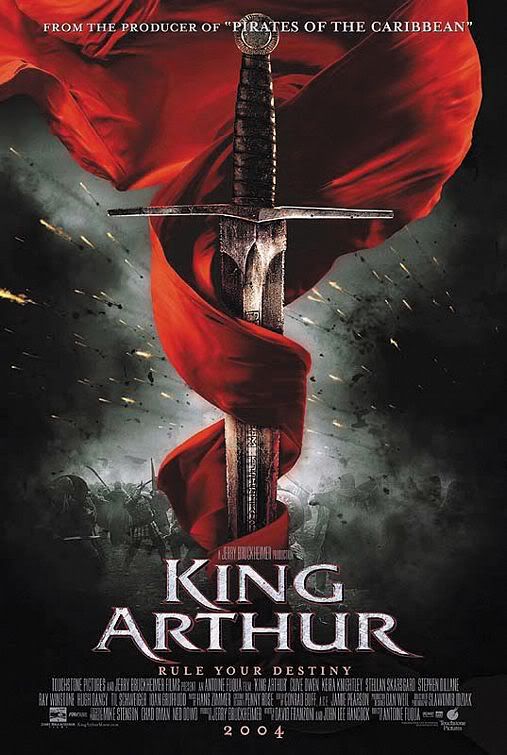
Fantasy Weapons Lore: Excalibur of Arthur Pendragon

There is some confusion on the origin of one of the most famous legendary swords in history. So let’s set things straight. There are actually two swords in the legend of King Arthur and Excalibur is the second one he wielded. Excalibur was said to have been made by an Elvish smith from the island of Avalon. It was magically imbued so that nobody could defeat its owner. To aid the sword, its scabbard was also magically enchanted so that anyone wearing it would never bleed and could heal their wounds instantly.

The other sword used by Arthur Pendragon is known as the Sword in the Stone and was nothing more than an extravagant typical broadsword that was used by his father, Uther Pendragon. When Arthur was born, Uther was slain in battle. Merlin took this sword and jammed into the rock and enchanted it so that only the true heir of Uther Pendragon could pull the sword. Arthur’s half-sister, Morgan le Fay was not the heir as long as Arthur was alive and is why she never claimed the blade of her father. This is not Excalibur, despite a lot of popular movies, books and cartoons making the blades the same.

Eventually Arthur came to the sword in the stone and retrieved it, making himself the king of Britain. Merlin gave him his support and Arthur went on to gather the people under the new banner of Pendragon. That would also involve some battles as Arthur’s father was a warmonger and not very well liked by several rulers. Many lords joined with Morgan le Fay, Arthur’s half-sister, who felt cheated out of the throne by a brother she didn’t know existed.

Jul 4, 2012

Weapons & Warriors: The Fu Tao of the Shaolin

If you have ever played any recent versions of Mortal Kombat, then you have seen the wickedness of the Fu Tao. Kabal's favorite toy is not a game designers conjured up idea of a crazy pair of swords. These things are for real, and they are really deadly.

To watch a Shaolin Monk perform with Fu Tao is a wonder to behold. These hooked swords are as dangerous to the Monk wielding them as they are to their opponent. The monk will constantly twirl the swords and with a flash he can strike with the razor sharp edges.

The sword blade is narrow and the tip curls forward into a hook. The edges are sharpened so that anything that slips into the hook can be snared. The hooks have a variety of uses, including tripping an opponent or disarming. Another trick used by Shaolin is hooking two swords together to double the reach of the deadly blades twirling them out and slashing with the razor sharp dagger below the handle. The hand guard is a sharpened crescent moon with the points facing away from the hand. No matter what angle the blade strikes from, it can slice into a foe with ease.


Apr 18, 2012

Weapons & Warriors: The Makraka of the Zande Warrior


Although the Makrigga and Kpinga were the first weapons a Zande Warrior reached for in a fight, they had another weapon that was as intimidating to look at as the other two. They had their own nightmarish version of a short sword they called the Makraka.

The handle was made of wood and bound with animal hides. The hammered iron blade was shaped like a sickle and was swung in a similar motion. The tip of the blade was thicker and heavier than the central portion of the blade. Unlike other sickle related swords used in Arabian lands and southern Europe, the Makraka was only sharpened on the interior portion of the blade.

The blade was specially designed to remove limbs with ease, like a more extreme version of the Spartan Kopis. This gave the weapon a dual purpose in that it was wicked looking and deadly weapon in combat, and afterwards it was used to remove the heads of prisoners. We’ll get into that ritual next week when I talk about the Azande’s use of psychological warfare against their enemies.

Mar 28, 2012

Weapons & Warriors: The Kpinga of the Zande Warrior


This is one of my most favorite throwing weapons in the entire world. It only serves one purpose, to kill or maim. The Kpinga was engineered to do it better than any other throwing weapon ever made. It is basically a perfectly crafted giant throwing knife. Unlike your standard throwing knife, the Kpinga actually has multiple blades at different angles so that once thrown, there was always at least one razor edge pointing at the target no matter what part of the spinning rotation it was in.

Many African tribes used this weapon in battle, and it had many names, but the Azande people called it the Kpinga. Another name it is known as is Hunga Munga, which is on of its more popular aliases. I can imagine that name may be as descriptive as any name as to what inspired the shape and design of at least one of the blades. Just look at the picture and you’ll know what I mean. It’s okay; I’ll give you a moment to pull your mind out of the gutter. Have your eyes shrunk back to their normal size yet? Good, let’s move on.


Mar 21, 2012

Weapons & Warriors: The Kilij of the Ottoman Cavalry

This week I’m doing a special Weapons Weekly on one of the grandfathers of the modern cavalry sabre, the Kilij. Unlike most other sabres, the Kilij had a special design that not only made it more dangerous than other sabres, but gave it an exotic appearance that fit well into the Turks that wielded it. The sabre was not a sword designed for fighting on foot such as the longsword and broadsword, but was specifically designed for cavalry. Sabres have curved blades that are sharp on only one side. Their blades were forged to handle slicing without shattering. The Kilij was one of the few sabres that were designed with thrusting as an option, but like all sabres, slashing at an opponent was still far more deadly.

The Kilij was a redesigned version of the Turko-Mongolian Sabre, which may have been the first sabre ever recorded in history. The Mongolians were notorious cavalrymen and had a heavy influence on Turkish culture after the Mongols invasions of the Turkish and Arabic lands. The difference between the Kilij and most other sabres is the tip. It had a double edged tip that flared out making the tip stronger and heavier. This added weight gave the Kilij an axe-like quality in that it was capable of cutting through bone with one swipe.

Mar 14, 2012

Weapons & Warriors: The Naginata of the Samurai

The Samurai were some of the greatest and most disciplined warriors in history. One thing they were well known for was having the right weapon for the right situation. A Katana or Tessen had limited use against a mounted opponent. The Naginata was designed to put distance between the Samurai and his opponent.

At a glance, the Naginata looks similar to a spear with a long thin curved blade, but it is actually related to the poleaxe, halberd, and even more so to the glaive. The wooden pole was anywhere from 5 to 6 feet in length. The end of the Naginata was fixed with a 3 foot sword-like blade that had a long steel piece with a hole opposite the sharp end. This thin sliver of metal was slid through a steel cap in the end of the pole and a wooden peg was squeezed through the hole lined up with a hole in the pole. This made it easier for the warrior to sharpen his blade by removing it first instead of trying to maneuver around that entire cutting surface with a very long pole pulling on it.

Mar 6, 2012

Weapons & Warriors: The Daneaxe of the Norsemen


Art by TL Jeffcoat
Legends often describe the Norsemen wielding a huge double bladed axe and a skullcap with horns on their head. The description of that conjures terrifying berserker giants bearing down on their enemies. Although there are many records of single bladed axes as tall as a man, there is no account of a Norsemen wearing a horned helm in actual battle or of the popular double bladed battle axe.

The horns would have only unbalanced the helm and gotten in the way of swinging his weapons. The extra blade would have been clumsy and impractical. Norsemen trained using the axe with techniques that would have not required an extra blade anyway. They were lethal enough with one simple blade. The danger it posed to its own wielder was also a reason Norsemen did not design these fantasy based axes. If a shield was rammed into their arms while holding the axe forward, the force of the shield could push the axe against them and that extra blade suddenly becomes their own demise.

Feb 27, 2012

Weapons & Warriors: The Longsword and Seaxe of the Norsemen

Despite some artists’ vision, the Norsemen did not wield giant swords. Those heavy Claymores were more popular among the Scotts across the sea. In fact, the Norseman rarely used a sword, since it was very expensive and difficult to forge. Most Norse, who did carry a sword, had to find a proper blacksmith to have their weapon created. Not all blacksmiths had learned the art of sword making. Making a blade in the times of the Norsemen Age was a long process that could take around a month and cost a lot of money, more than the common Norseman could afford.

Norsemen considered the sword a sign of wealth and success, or a descendant of someone wealthy or powerful. This is one of the few weapons that were handed down from generation to generation. An inherited sword was not always an immediately useable gift as it might have been well used already and required some repair. If the blade was recovered from a battlefield or duel it was most likely damaged. Those in power were often challenged by others who wanted their position in society, and a duel was often an answer to such a challenge. 

The Norse respected strength and skill in combat above all. So winning a duel was an acceptable way of working out an agreement. This carried over into more petty things such as who had the right to marry a certain woman or if a man wanted to cut a tree on his land, but his neighbor claimed it was his tree. Nothing is more final than a fight to the death. That may sound extreme, but keep in mind, most Norsemen wanted to die fighting so they could go to Valhalla. Dying of old age was considered an embarrassment.

There were two swords used by the Norsemen. The most common sword was the double edged longsword, which had a thin triangle shaped blade that was around 3 feet in length. It was most often used with a round wooden shield. Most swords in Europe in this age did not have a cross guard to protect the hand from enemy blades sliding down on the fingers.

Many of the swords made in the later ages of the Norse were marked on the blade. A change in the types of steel and iron used allowed for this that the previous metals did not. The older versions included iron with the steel which was twisted together at very high temperatures and then flattened and sharpened. The newer metal was stronger steel, so that marking into the metal did not weaken the blade as it would have with previous designs. Norse spent a lot of time crafting the elaborate hilts and often named the sword once it was complete.

The Seaxe is equally as long, but generally has a thicker blade and is only sharp on one side. The exact thickness varied and the Seaxe resembled anything from a long machete to a cleaver. The Seaxe was more common on the longships because they made excellent blades for cutting ropes as well as removing an enemy’s limbs in combat. All practical warriors enjoy multipurpose tools. 

Modi, was the Norsemen God of Rage and was often envisioned with a sword. One of the reasons Norsemen were called savage barbarians by outsiders was the seemingly fearless rage that some of these warriors seem to present on the battlefield. There were myths and legends of these Berserkers. There is no shortage of stories about a warrior who would charge into the enemy line with the strength of ten men and swing his weapons wildly. He could ignore all injuries that were inflicted upon him until he was dead, or everyone else was. 

In reality, this berserker rage is just a legend. It is not unlikely that a few of the Norsemen would throw themselves onto an enemy line and swing their sword like a crazed madman, but that reflects their religious beliefs more than some mysterious rage induced berserk. However, most legends and myths have some basis to something that was real. With one of the members of their pantheon being a God of Rage, it is likely that some Norsemen pushed their adrenaline and rage over the top and went mad in battle as a tribute to their God. I’m not an expert on that matter, but it sounds like a possibility.


I hope you enjoyed this edition of Weapons and Warriors, click here to view the entire catalog of weapons and cultures. Thank you, see you next week.

Jan 9, 2012

Weapons & Warriors: The Tecpatl of the Aztec

When you hear about Aztecs, some people often think about human sacrifice. Nobody knows how many sacrifices the Aztecs made a year. There is some speculation, and some accuse Cortés of greatly exaggerating the stories about the human sacrifices. Some other explorers and conquistadors that encountered the Aztec people made no mention in their notes and books of human sacrifice. Archaeologists however have uncovered many things in the ruins that would support the belief that the Aztecs sacrificed humans.

The Jaguar and Eagle Warriors were a major component to this ritual. They did not perform the ritual, but they were the ones who supplied the victims. The tool that was used to cut the heart out of the sacrifice was called the Tecpatl. It is about seven to nine inches in length. The handle is usually carved stone or wood and the blade was a double edged piece of obsidian. This volcanic produced glass is not only very hard, it can be sharper than steel. The Aztecs collected tons of obsidian for making their weapons. The Tecpatl may have been extremely sharp, but obsidian was more susceptible to dulling or cracking after striking something. 

Dec 29, 2011

Weapons & Warriors: The Tessen of the Samurai

Art by TL Jeffcoat
You Mortal Kombat fans have seen this used by the ninja Kitana, but what you may not know is that this is not a purely fictional device. These specially designed fans were made with iron spikes and were very popular tools among Samurai and many others in Feudal Japan who were able to afford them.

The Tessen was designed to appear as an everyday fan used for cooling off. Instead of wood or paper panels, it was made with thin strips of iron, which were then sharpened. The fan could be folded up to hide its deadly nature and carried around without anyone knowing its true identity. This comes in handy when a Samurai enters an area that swords are forbidden, such as another lord’s home in which he refuses to allow the Samurai inside while armed with his katana. With the Tessen, the Samurai remains armed, despite his host insisting otherwise.

Dec 12, 2011

Weapons & Warriors: The Daishō of the Samurai

The word Daishō stands for big-little in Japanese and is often referenced towards the style of dual swords that Samurai wore. It was a combination of two swords known as a katana and a wakizashi, or in some cases the even smaller tantō, with matching designs. Most of you are probably familiar with the katana. It only happens to be one of the most famous weapons on Earth and is used in many forms of martial arts around the world. The popularity of this sword is not overblown due to symbolism and legends either. It is one of the most deadly swords ever designed. Lightweight and extremely strong, this blade is capable of literally cutting a man in two. In fact, many Samurai tested their katana after it was forged by executed a criminal. If the blade did not cut the man in two, he returned the sword to the smith, sometimes with murderous intentions. The Samurai took their katana very serious, their life depended on this sword, and a poor design could cost him his life.

Nov 27, 2011

Weapons & Warriors: The Shikomi of the Ninja


There were two forms of Shikomi used by Ninja, the Gatana and the Zue. Both were effective tools used to conceal a sword. The Ninja were well known for hauling around an extensive arsenal, but sometimes that was not always possible. For instance, while walking around in broad daylight among the public, a Ninja could not carry his swords without drawing attention. Or could he?

Once the technology to create thinner blades that wouldn’t break so easily was learned, the Ninja embraced it with a new weapon that was the most ingeniously disguised sword ever made. The Shikomi-Gatana was the more common of the two. When carried around by a Ninja who wanted to appear as a traveler or monk, it resembled a walking staff. A common tool used by many people both wealthy and poor. Once threatened or attacked, the Ninja would reveal the true nature of the staff. In reality, the staff was a scabbard that held a thin bladed sword, which could easily be drawn from one end.

This caught more than one enemy by surprise as the Ninja would often begin the fight using the staff as if it was what it appeared to be, but instead of swatting at the swordsman, he would deflect his sword, moving to the side and drawing his own sword hidden in the staff. Ninja trained well at these types of maneuvers and often cut down an opponent before they realized the Ninja ever had a sword at all.