Showing posts with label staff. Show all posts

Jul 30, 2012

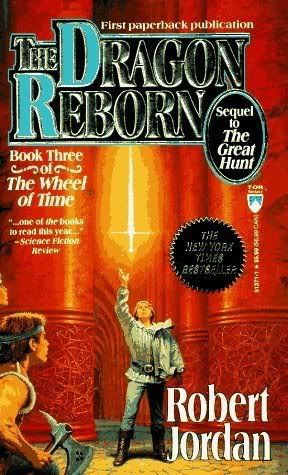
Fantasy Weapons Lore: Callandor of Rand al’Thor


One of the most powerful weapons ever imagined up is the sword called Callandor. Despite its appearance it is not actually a sword. This flashy crystal-like sword is a conduit for the male channelers of saidin (The One Power). Channeling this power and weaving it into the elements in the Wheel of Time series is how magicians cast spells. They don’t use wands and some are powerful enough to sink entire cities.

Callandor is one of the most powerful tools ever designed in this world and was molded into the shape of a sword for the man who wielded it into battle at the head of his huge armies against the Dark One's forces. It was made to allow a man to greatly increase the amount of power that he can normally channel.

This is not the same as the wands and staffs of Harry Potter and Lord of the Rings. Although those items increases a sorcerer’s power and allows the caster to cast spells at greater speeds without instant fatigue, the casters in the Wheel of Time don’t require hand movements or words to cast spells. All they have to do is learn to mentally manipulate the elements they can draw on to do what they want. Each “spell” is actually a weave of elements that is controlled through channeling the One Power.

Jun 27, 2012

Weapons & Warriors: The Yueya Chan of the Shaolin


This crazy looking pole arm is better known as the Monk’s Spade. Shaolin Monks carried a shovel when they traveled for various reasons, including digging holes for any corpses they might came across, so that they were given proper burial. The flat sharp blade also served as a weapon used in self-defense. The Shaolin Monks are pacifists and will not harm anyone, unless they are attacked. Once threatened however, the Shaolin have proven to be lethal adversaries.

The spade eventually evolved into the pole arm it is now and is one longest lasting weapon arts still practiced in the Shaolin arsenal today. I read somewhere it first appeared over 2,500 years ago. A crescent moon shaped blade was added to the pole opposite of the spade to sharpen both ends, and offer more balance to the cumbersome weapon. The overall length of the Yueya Chan is between six to seven feet and can vary in weight from 10 to 25 pounds, or even more. The width of the flat blade ranged between eight inches to more than a foot.

Jun 19, 2012

Weapons & Warriors: The Tewhatewha of the Māori

This axe-like wooden club was another weapon that was not wielded in the same manner a European invader would have anticipated at first glance. Like many weapons designed by the Māori, they were not used to chop at an enemy like an axe or club. Forward strikes and counter attack slashes were the preferred techniques. Something else confusing to someone who was expecting to battle against an axe was that the sharpened end wasn’t the end with the axe shaped head.

The entire weapon was carved from one solid piece of wood. One end was carved with a fat flat end about half a foot wide that resembled a lumber axe. The rest of the length was nearly five feet and tapered into a sharpened point. At the bottom of the axe-head a hole was drilled and feathers were tied by a cord to dangle. Sometimes designs were carved into the wide flat portion of the head.

May 9, 2012

Weapons & Warriors: The Taiaha of the Māori


Some might call it a spear or javelin, but this weapon was not made to be thrown. Despite the appearance as a short spear, the Taiaha is bulky and not designed with aerodynamics in mind at all. In fact throwing a Taiaha could be considered a grave insult to a Māori warrior, especially if it embeds itself in something other than an enemy.

The sharp end of the Taiaha is called a tongue, which protrudes from the thicker carved head. The tongue is sharpened and knife like and is used for stabbing or blocking enemy weapons. The shaft gives the Māori better range in close combat and increases the power of a thrust. Māori use this weapon with both hands. The bottom of the shaft was also flattened so that it could be used to thrust and wound enemies.

The Māori trained to use the Taiaha defensively as well as offensively, so that they were able to block attacks and counter with quick short movements. The Taiaha was the weapon of choice by Māori warriors before gunpowder and training began at a young age. Once they were old enough to go to war; they would be masters of the Taiaha. The Taiaha art is still taught today.


Nov 27, 2011

Weapons & Warriors: The Shikomi of the Ninja


There were two forms of Shikomi used by Ninja, the Gatana and the Zue. Both were effective tools used to conceal a sword. The Ninja were well known for hauling around an extensive arsenal, but sometimes that was not always possible. For instance, while walking around in broad daylight among the public, a Ninja could not carry his swords without drawing attention. Or could he?

Once the technology to create thinner blades that wouldn’t break so easily was learned, the Ninja embraced it with a new weapon that was the most ingeniously disguised sword ever made. The Shikomi-Gatana was the more common of the two. When carried around by a Ninja who wanted to appear as a traveler or monk, it resembled a walking staff. A common tool used by many people both wealthy and poor. Once threatened or attacked, the Ninja would reveal the true nature of the staff. In reality, the staff was a scabbard that held a thin bladed sword, which could easily be drawn from one end.

This caught more than one enemy by surprise as the Ninja would often begin the fight using the staff as if it was what it appeared to be, but instead of swatting at the swordsman, he would deflect his sword, moving to the side and drawing his own sword hidden in the staff. Ninja trained well at these types of maneuvers and often cut down an opponent before they realized the Ninja ever had a sword at all.